When the food bowl is a flashpoint
Guarding food, a chew or the couch is normal dog behavior that has become inconvenient indoors. Why punishing it backfires, and what to do instead.
Your dog stiffens over the bowl. Or freezes over a bone, or growls when someone reaches past them on the couch.
The instinct is to take the thing away and settle who is in charge. That is the one move almost guaranteed to make it worse, and the reason why is most of this article.
What is resource guarding?
A dog protecting something it values from being taken: food, a chew, a toy, a spot on the couch, sometimes a person.
Dogs guard because guarding works, and because an animal that shrugged off losing its dinner would not have lasted long. This is ordinary behavior that has become inconvenient indoors. It is not a dominance bid, it is not your dog deciding who runs the house, and it is not a bad temperament.
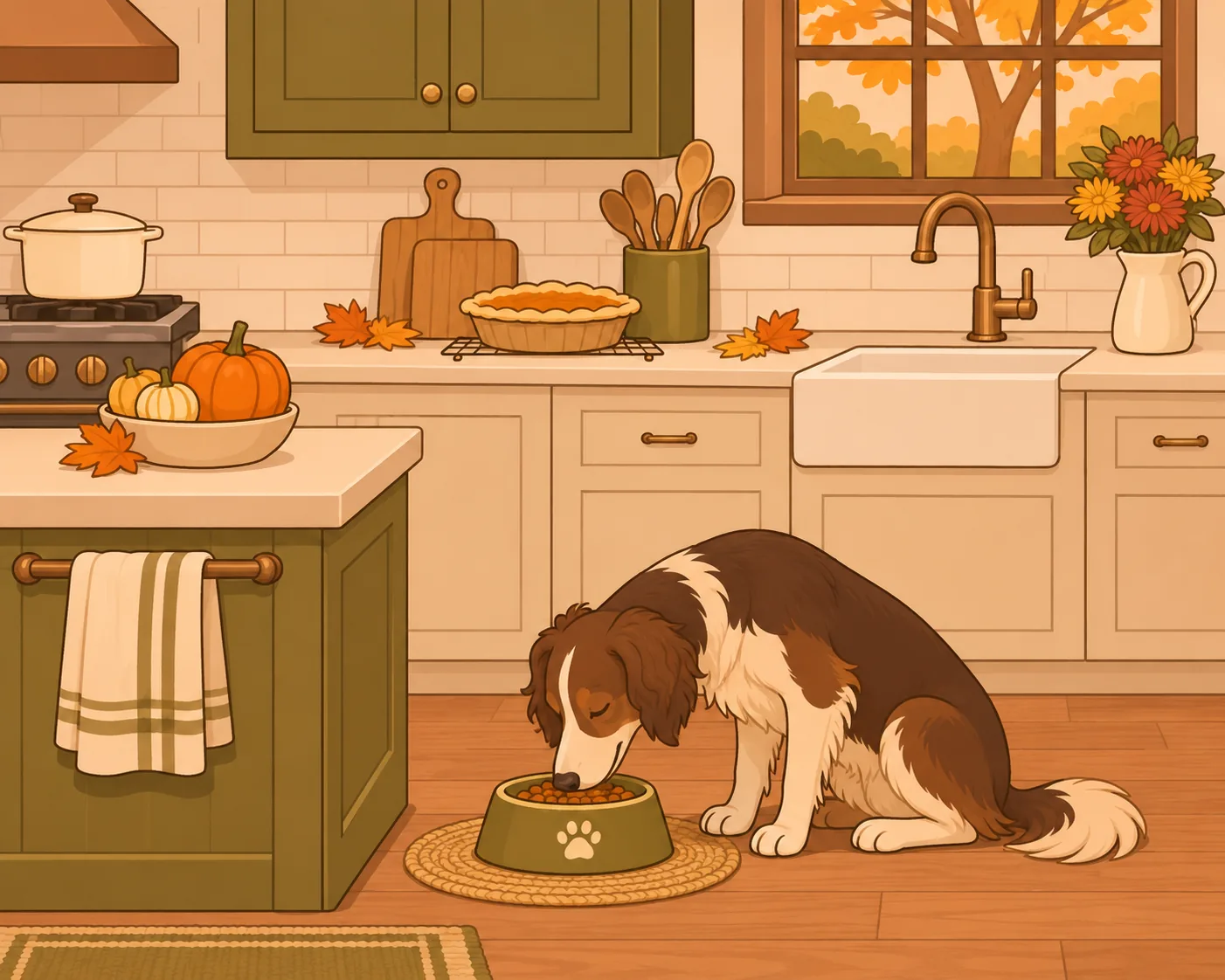
Why does taking the food away make it worse?
Because it proves your dog was right to worry.
Here is the lesson your dog actually learns. A hand comes near the bowl, and the bowl disappears. So the hand is a threat to the bowl, and next time it is worth objecting sooner and more clearly. People who practice taking food away to show a dog who is boss usually report that the growling got worse over a few months. It did. They spent those months teaching it.
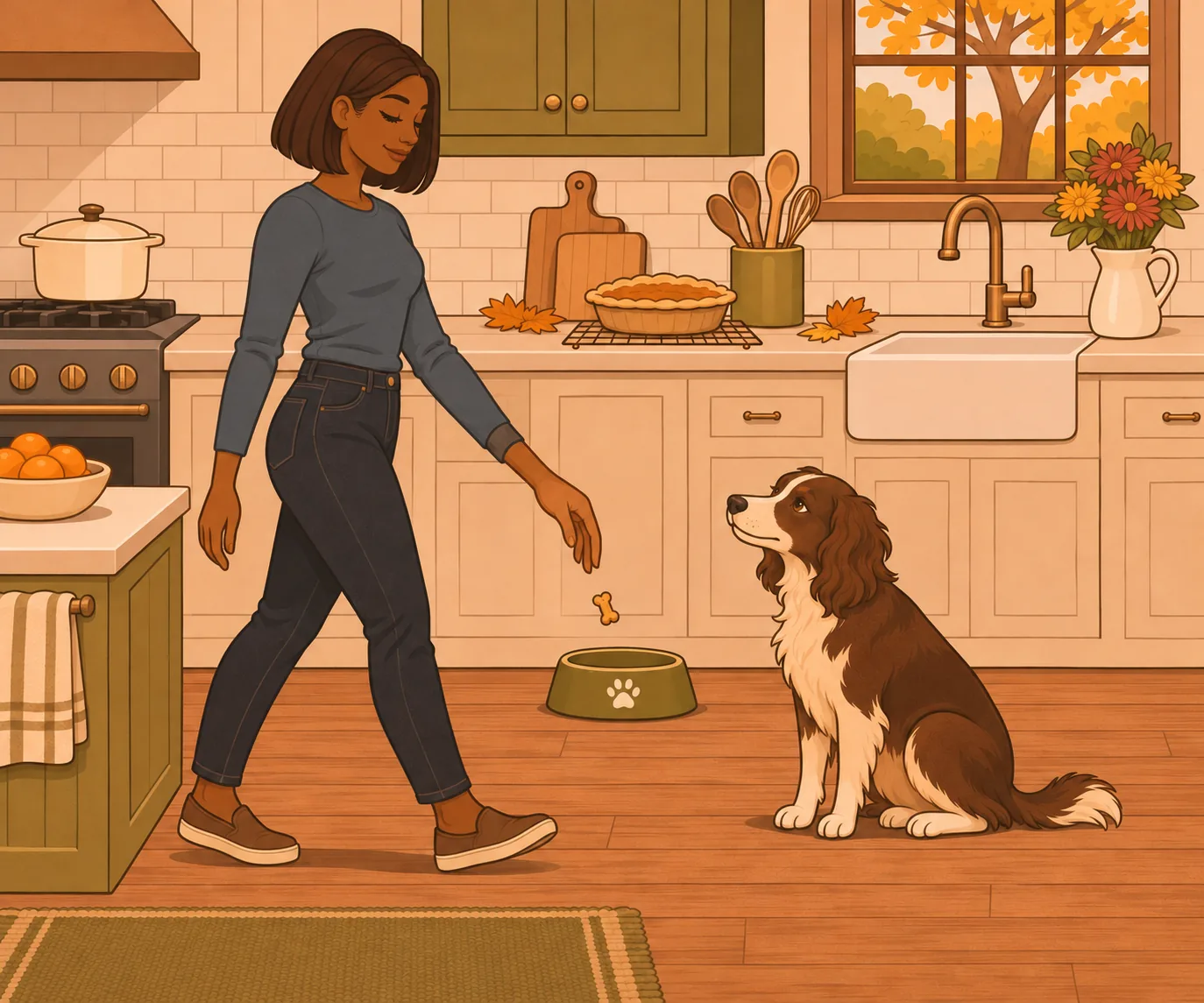
The reverse works just as reliably. If a hand near the bowl predicts something better landing in it, the hand stops being a threat, which is the whole mechanism. It is slow, it is boring, and it works.
Is growling a warning I should punish?
No. The growl is the single most useful thing your dog does.
A growl is a warning that costs nobody anything. It means "I am uncomfortable and I would like this to stop," said before anything else happens. Punish it often enough and many dogs do stop growling. That feels like progress and is the opposite: you have removed the warning without changing how your dog feels. What is left is a dog who goes from still to teeth with nothing in between.
Suppressing the growl is how a predictable dog becomes an unpredictable one, which is the reason it is worth letting your dog tell you.
What should I do instead?
Manage the environment so the guarding is not being rehearsed, trade for things rather than taking them, and make your approach predict something good. In that order, because the first one buys you the time to do the other two.
-
Manage first. Feed your dog somewhere nobody walks past. Shut the door. Pick up the high-value chews before guests arrive. This changes nothing about how your dog feels, and that is fine. It buys you weeks in which the pattern is not getting stronger.
-
Trade instead of taking. When your dog has something they should not have, swap it for something better rather than prying it out. A dog who learns that giving things up produces an upgrade will start bringing you the sock.
-
Make your approach good news. Walk past the bowl at a distance your dog stays relaxed at, drop something better in, and keep walking. Shorten the distance over weeks, not days. If your dog stiffens, you moved too close too fast, and the fix is more distance rather than more repetitions. Distance is the same lever that does the work on walks.
When is this a veterinarian's problem rather than a training problem?
Sooner than most people think. Call a professional if the guarding appeared suddenly in a dog who never did it, is escalating despite management, is aimed at a person rather than an object, or has involved teeth on skin.
Pain is an underdiagnosed cause of sudden irritability, and a veterinarian can rule it out faster than a trainer can work around it. That is worth doing first even when the behavior looks purely like training.
If your dog has bitten someone, stop reading and call both a veterinarian and a credentialed behavior professional. A bite history changes the plan, the safety setup, and sometimes who the right professional is.
What is worth writing down?
What your dog was guarding, who approached, how close they got, and what your dog did at each distance.
Guarding is one of the easiest patterns to misread from memory, because the incidents that stick are the loud ones. A written record usually turns "he guards food" into something far more specific: only high-value chews and never kibble, only when one particular person approaches, only in the kitchen. Each of those points to a different plan, and none of them is visible from one bad afternoon.
One thing worth keeping in mind is that the record matters most on the day you hand it to someone else. A trainer or a vet who can see which distances your dog is fine at starts from your evidence rather than from their assumptions.